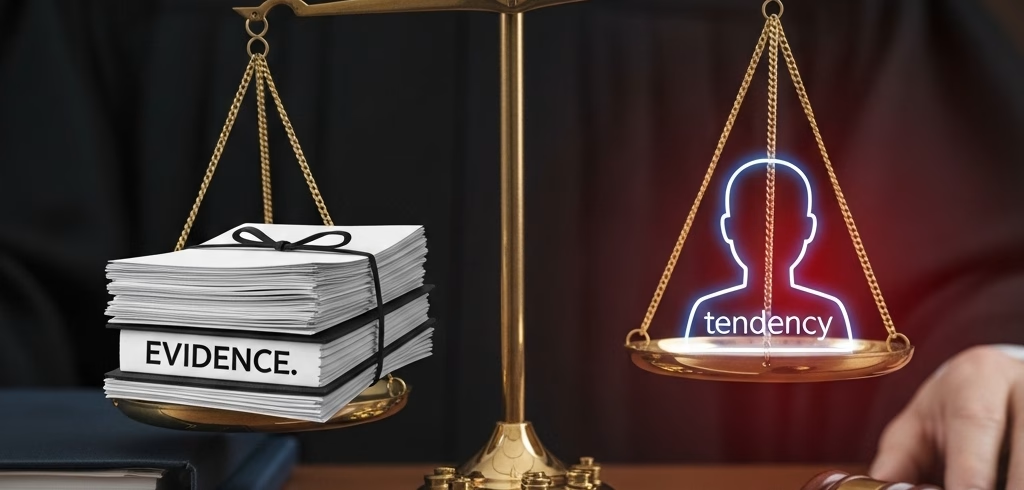
Oral contracts are legally binding in many situations, but proving their existence and enforceability can be challenging. Whether you’re entering a business deal, agreeing to services, or resolving a dispute, understanding how oral contracts work is essential for protecting your legal rights.
What Makes Oral Contracts Enforceable?
For any contract, written or oral, to be legally enforceable, it must contain the following four essential elements:
1. Agreement (Offer and Acceptance)
One party must make a clear and definite offer, and the other party must accept the same offer without modification.
2. Consideration
Each party must exchange something of value (e.g., money, goods, services, or promises).
3. Intention to Create Legal Relations
Both parties must intend the agreement to be legally binding on the parties and have legal consequences.
4. Legal Capacity
The parties must have the legal capacity to enter into a contract e.g. be over 18 and of sound mind.
Formation Requirements for Oral Contracts
There are generally no formal requirements as to how a contract must be made. This means oral contracts can be created verbally, in writing, or even through conduct, so long as these key elements are present.
However, certain types of contracts are required by law to be in writing. For example, contracts for the sale or transfer of land must be written under most property legislation. If a written form is required and not provided, the agreement may be unenforceable.
What Is Required for a Valid Agreement?
To form a valid oral agreement:
- The offer must demonstrate a clear intention to be bound by specific terms.
- The acceptance must be unequivocal and communicated to the other party.
- Both parties must agree to the same terms, without further negotiation.
Proving Oral Contracts Exist
While oral contracts are valid, proving their existence can be more complex than with written contracts. Courts will rely on a combination of oral testimony and supporting written evidence.
Oral Evidence for Verbal Agreements
Witness Testimony
- Witnesses who heard or observed the agreement can provide supporting testimony.
- Witness statements may be presented in the form of affidavits (written statements sworn under oath).
- Multiple witnesses strengthen the credibility of oral contract claims.
Best Practices for Documentation
Where you do not have a written contract, it is useful to record the details of an agreement by email or messages between the parties. Where this is not possible, journal how the agreement came into existence, the terms of the agreement and what steps were taken by the parties (if any), in accordance with the agreement and keep a written record.
Written Evidence Supporting Oral Contracts
Electronic Communications
- Emails, text messages, or letters discussing the agreement can help establish terms.
- Social media messages or instant messaging conversations may be admissible.
- Even informal messages may help demonstrate mutual understanding.
Financial Records
- Invoices, receipts, bank statements, or purchase orders showing payment or performance under the agreement can support your claim.
- Payment patterns demonstrating ongoing performance under oral agreements.
- Financial transactions consistent with alleged contract terms.
Performance Evidence
- Documentation of work completed or services rendered.
- Delivery records or shipment confirmations.
- Any actions taken by parties consistent with the alleged oral agreement.
Legal Binding Nature of Oral Contracts
Oral contracts can be legally binding if all key elements of a valid contract are present. However, courts will scrutinize the intention behind the agreement and whether a reasonable person would have understood the language used as a legally binding commitment.
When Are Verbal Agreements Enforceable?
Courts consider various factors when determining enforceability:
Clarity of Terms
- Were the essential terms clearly communicated and understood?
- Did both parties have a mutual understanding of obligations?
- Were key details like price, timing, and deliverables specified?
Conduct of Parties
- Did parties act in a manner consistent with a binding agreement?
- Was partial or full performance initiated?
- Did parties refer to the agreement in subsequent communications?
Context and Circumstances
- Was the discussion casual or conducted in a business context?
- Did the parties have an existing business relationship?
- Were lawyers or advisors involved in the discussions?
Common Challenges with Oral Contracts
Disputes Over Terms
Without written documentation, parties often disagree about:
- Specific obligations and performance requirements
- Payment amounts and timing
- Duration of the agreement
- Conditions for termination or modification
Evidence Limitations
Proving oral contracts faces inherent challenges:
- Memories fade or become unreliable over time
- Parties may have genuinely different recollections
- Lack of objective documentation makes resolution difficult
- Credibility assessments become central to case outcomes
Protecting Your Interests in Verbal Agreements
To avoid disputes and uncertainty, we always recommend putting important agreements in writing. A written contract provides clear evidence of the terms and intentions of both parties.
Immediate Steps After Making Verbal Agreements
Confirm in Writing
- Send follow-up emails summarizing key terms discussed
- Request written confirmation from the other party
- Document any modifications or clarifications promptly
Preserve Evidence
- Save all communications related to the agreement
- Keep records of all payments or performance
- Maintain witness contact information
- Document timeline of events and discussions
Seek Legal Review
- Consult legal professionals before relying solely on oral agreements
- Have important agreements formalized in writing
- Understand which contracts must be written by law
When to Seek Legal Assistance
Professional legal advice becomes crucial when:
- Entering significant business transactions
- Disputes arise over oral agreement terms
- The other party denies the agreement’s existence
- Substantial money or property is involved
- Contract enforcement proceedings become necessary
Need Legal Advice?
If you are involved in a dispute over an oral agreement or want to better protect your interests in any kind of contract, our team of solicitors is here to help you with commercial law.
Contact Citilawyers today for legal advice and tailored legal support regarding contract formation, enforcement, or dispute resolution.