Have you had Wrongful Defamatory Comments Made Against Your Business?
Your business’s reputation can take years to build but only moments to damage. Whether it’s a false online review or misleading social media post, defamatory statements can have serious consequences for your revenue and standing. Understanding how the Defamation Act NSW applies to businesses is crucial for protecting what you’ve worked hard to establish.
How NSW Defamation Law Protects Businesses
Defamation law protects reputation while balancing free speech rights. For business owners in NSW, understanding these principles helps you recognize when your business rights have been violated and whether legal protections apply to your situation.
The Defamation provides a legal framework that can help businesses recover from reputational damage caused by false and harmful statements.
What Constitutes Defamation of Character for Businesses?
Under the Defamation Act NSW 2005, defamation occurs when false and harmful material is published to others, damaging someone’s reputation. The Defamation Amendment Act 2023 introduced a “serious harm” requirement, making claims more challenging but ensuring genuine protection for those facing defamation of character attacks.
For businesses, this commonly occurs through:
- Google or Facebook reviews containing false allegations
- Harmful emails sent to customers or clients
- Social media posts making untrue claims about your services
- Comments to suppliers or business partners that damage your professional standing
The Four Essential Legal Elements
To succeed in defamation proceedings, plaintiffs must prove:
- Publication to a Third Party – Content communicated to at least one other person beyond the business owner
- Identification – The business is identifiable directly by name or through context clues
- Defamatory Meaning – Content that makes reasonable people think less of the business
- Serious Harm – The publication has caused or will likely cause serious reputational or financial damage
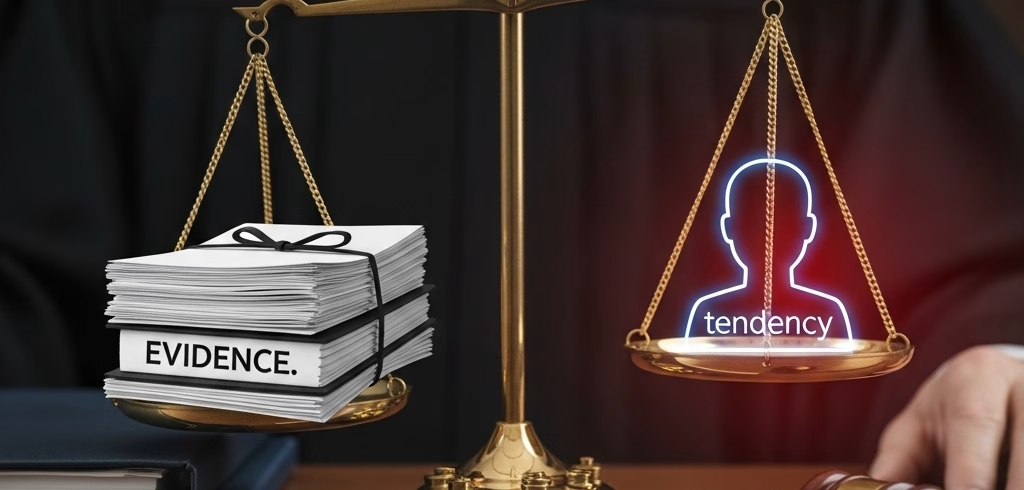
The “serious harm” requirement means businesses must demonstrate concrete evidence of damage, not just potential or speculative harm.
Business Eligibility for Defamation Claims
Not all businesses can sue for defamation of character. Only certain types of businesses have legal standing to bring such claims:
Eligible Business Types
- Individual sole traders – Can sue as individuals for harm to their business reputation
- Not-for-profit organisations – Protected regardless of size due to their community service nature
- Small for-profit companies – Must have fewer than 10 employees to qualify
Excluded Businesses
Large corporations with 10 or more employees cannot bring defamation claims. This exclusion reflects the policy view that larger businesses have sufficient resources and market power to respond to criticism through other means.
What Constitutes “Serious Harm” for Businesses
For eligible businesses, serious harm typically manifests as:
- Damage to professional relationships with suppliers or partners
- Declining profits directly linked to the defamatory publication
- Lost contracts or cancelled business relationships
- Reduced customer base with measurable impact
- Difficulty securing new business opportunities
Key Legal Defences Against Business Defamation Claims
Understanding potential defences helps businesses assess both their own claims and potential responses to accusations:
- Truth (Justification – Section 25): If the statements are substantially true, this provides complete protection.
- Honest Opinion (Section 31): Protects genuine opinions on public interest matters based on proper material.
- Qualified Privilege (Section 30): Protects communications where there’s a duty to publish and the recipient has an interest in receiving the information.
- Absolute Privilege (Section 27): Complete protection for court proceedings, parliamentary debates, and official communications.
- Contextual Truth (Section 26): Where some imputations are true but others aren’t, may still provide defence if untrue parts don’t add to the harm.
Digital Defamation Challenges
Online publications create unique issues:
- Content can reach vast audiences instantly and remain permanently searchable
- Sharing defamatory content can constitute republication
- Anonymous posting doesn’t guarantee protection
- Search engines can amplify reputational damage
See the NSW Government’s media release on these digital defamation reforms.
The Intersection of Personal and Business Reputation
For sole traders and small business owners, the line between personal and business defamation of character can blur. Attacks on the business owner’s character often directly impact business operations, while criticism of business practices may harm personal reputation.
Understanding how the Defamation Act NSW applies to these interconnected reputations helps business owners recognize when they have legal options for protection.
Key Legal Considerations
NSW defamation law now requires “serious harm,” meaning you need concrete evidence of damage, not just speculation. The law balances reputation protection with free speech, but litigation is expensive and time-consuming for all parties.
Whether protecting your reputation or defending against claims, early legal advice is crucial. Professional guidance helps you understand your rights, explore resolution options, and make informed decisions about pursuing or defending legal proceedings.
Need Help With Defamation?
If your business has been targeted with false and damaging statements, you don’t have to navigate this alone. At Citilawyers, we help NSW businesses understand their rights and take practical steps to protect their reputation.
Our team can:
- Assess whether you have a viable claim
- Guide you through the Concerns Notice process
- Negotiate resolutions without costly court proceedings
- Represent you in formal legal action when necessary
- Defend you against unfounded claims
Don’t let false statements damage your business reputation. Contact Citilawyers today for legal guidance tailored to your specific situation.
Time is critical in defamation matters – with only 12 months to act, early legal advice can make all the difference to protecting your business.